Prince George sits at the confluence of the Fraser and Nechako rivers, where glacio-lacustrine silts and clays dominate the valley floor. These fine-grained deposits, often containing layers of sensitive clay left by glacial Lake Prince George, can shift dramatically with seasonal moisture changes. A standard grain-size distribution analysis will tell you how much silt or clay is present, but it will not explain how the soil behaves when water content fluctuates during the spring thaw or a wet autumn. The Atterberg limits—liquid limit, plastic limit, and the resulting plasticity index—quantify that behavior. Running these tests under ASTM D4318 gives our clients in Prince George the data needed to classify the soil according to the Unified Soil Classification System (USCS) and to anticipate volume-change potential before placing footings, slabs, or buried utilities. For projects on the Nechako Plateau benches, we often combine Atterberg limits with a triaxial shear test to correlate plasticity with drained strength parameters for slope stability assessments.
Atterberg limits transform a simple clay sample into a behavioral profile—shrinkage potential, drained strength trend, and sensitivity—all from water content alone.
Methodology applied in Prince George
Typical technical challenges in Prince George
A recurring issue we observe in Prince George is the misclassification of low-plasticity silt as non-frost-susceptible fill. The Atterberg limits cut through that assumption: a silt with a liquid limit below 30 and a plasticity index between 4 and 7 can still generate significant ice lensing under prolonged freezing conditions. When such material is placed as structural backfill behind a retaining wall or beneath a slab-on-grade, the seasonal heave can rack the structure within the first three winters. The NBCC references frost protection requirements, but the trigger for those measures often traces back to the plasticity index measured in this test. Skipping the Atterberg determination on a site with glacio-lacustrine parent material is a gamble on the soil's sensitivity to water; in a city where the groundwater table sits within two meters of the surface across much of the bowl, that gamble rarely pays off in the long term.
Our services
Our Atterberg limits determination forms part of a broader suite of index and classification tests available to geotechnical consultants and civil contractors operating in the Prince George area. Each service below contributes to a complete soil characterization package.
Multipoint Liquid Limit
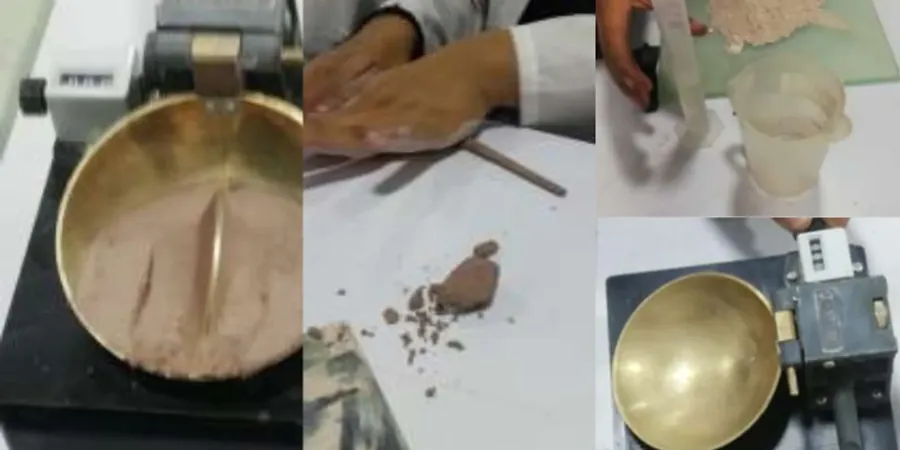
Full ASTM D4318 procedure using four or more water-content trials on the Casagrande cup to establish the flow curve with a correlation coefficient exceeding 0.99, yielding a defensible liquid limit value for regulatory submissions.
Plastic Limit and Plasticity Index
Thread-rolling determination of the moisture content at the boundary between the plastic and semisolid states, combined with the plasticity index to classify the soil on the Casagrande plasticity chart.
Liquidity Index Calculation
Derivation of the liquidity index from the natural water content, plastic limit, and liquid limit to assess the in-situ consistency of clay strata encountered in test pits or boreholes across Prince George.
Shrinkage Limit (Optional)
Determination of the shrinkage limit using the mercury displacement or wax method for projects where volumetric stability of compacted clay liners or earth dam cores is a design concern.
Frequently asked questions
How much does Atterberg limits testing cost per sample in Prince George?
For projects in the Prince George area, a standard Atterberg limits determination (liquid limit, plastic limit, plasticity index) typically falls between CA$90 and CA$130 per sample, depending on whether the soil requires wet preparation or contains organic material that needs pretreatment. We provide firm quotes based on the total number of samples and the required turnaround time.
Why are Atterberg limits important for foundation design in the Prince George region?
The glacio-lacustrine silts and clays found throughout the Fraser-Fort George area have a wide range of plasticity. The Atterberg limits identify whether a soil will behave as a brittle sensitive clay or a ductile plastic clay under load, which influences bearing capacity assumptions, frost heave susceptibility, and the depth of strip footings required to reach stable moisture conditions.
What sample quantity is needed to run the liquid limit and plastic limit tests?
We require approximately 500 grams of material passing the No. 40 sieve from a representative disturbed sample. For Shelby tube or thin-wall samples taken in Prince George's sensitive clays, we prefer the sample to be sealed immediately after extrusion to preserve the natural water content, which is essential for calculating the liquidity index.
How do Atterberg limits relate to the Unified Soil Classification System (USCS)?
The liquid limit and plasticity index plot directly onto the Casagrande plasticity chart to assign the USCS symbol—for example, CL for lean clay, CH for fat clay, or ML for low-plasticity silt. This classification governs everything from compaction specifications to the selection of appropriate triaxial testing programs for the project.