In Prince George, the frost line goes deeper than most contractors expect—up to 1.8 m in open areas with no snow cover. That alone rules out shallow footings for many commercial and industrial structures near the Fraser and Nechako river corridors. We see it in the field every season: a building pad looks fine in August, but by February the upper till has heaved enough to crack a grade beam. Pile foundation design here has to account for that seasonal cycle plus the soft glaciolacustrine clay that sits under much of the Bowl area. When we combine the in-situ permeability data from silty lenses with the structural loads, the pile length often extends deeper than the original geotechnical report predicted. The NBCC 2020 seismic hazard values for Prince George—moderate but real—add another layer, requiring liquefaction assessment in saturated fine sands found along the floodplain. We do the analysis, but the numbers have to come from the ground, not from a textbook.
A pile is only as reliable as the soil layer it bears on. In Prince George, that layer can shift from dense till to soft clay in less than 30 meters.
Methodology applied in Prince George
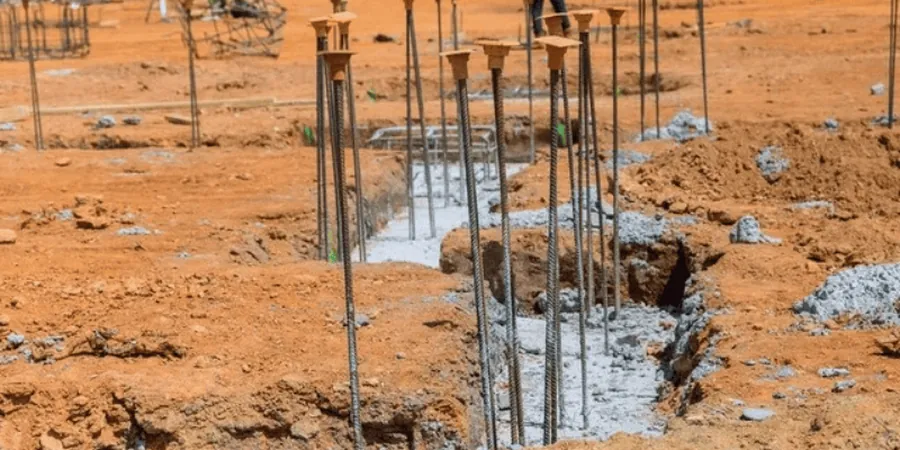
Typical technical challenges in Prince George
A drill rig working in Prince George during breakup season faces challenges most operators in southern BC never see. The ground turns to soup. Access roads into the lot become impassable for a concrete truck. That is why we plan pile installation windows carefully—late May through October works, but April and November can lose you a week of production. The risk is not just schedule: if a hole collapses before the rebar cage goes in, the pile loses its design section. In the clay-rich till near the University, we often use temporary casing to keep the borehole open. Another local risk is boulder refusal. The advance of a driven pile can stop dead on a granite erratic, and the design has to anticipate that with an alternative termination criteria—usually a minimum set per blow on the hammer. No one likes a pile that hangs up 2 meters above design tip elevation.
Our services
We provide two core pile foundation design service packages in Prince George, scaled to the project size and site complexity. Both start with a review of existing geotechnical data before any new fieldwork is authorized.
Deep Foundation Design Package
Complete axial and lateral capacity analysis for driven or drilled piles, including group efficiency, settlement prediction using t-z curves, and structural detailing per CSA A23.3. We deliver stamped calculations and construction specifications ready for the building permit application.
Pile Installation Support
On-site monitoring of pile driving or drilling, dynamic load testing coordination (PDA), CAPWAP analysis, and real-time adjustment of termination criteria. This service is critical when the subsurface conditions deviate from the original investigation.
Frequently asked questions
How deep do piles need to go in Prince George to get below the frost line?
The pile cap and the upper portion of the pile must extend below 1.8 m in open terrain per NBCC 2020 climatic data for Prince George. However, that depth is only for frost protection. The actual pile tip elevation is determined by where competent bearing stratum is found—often dense till at 12 to 18 meters below grade in the Bowl area.
What is the typical cost range for a pile foundation design package?
For a standard commercial building in Prince George, the design package typically runs from CA$2,470 to CA$9,440 depending on the number of pile groups, the complexity of the soil profile, and whether dynamic load testing is included. A simple residential addition with 4–6 micropiles will be at the lower end; a multi-story structure with lateral load analysis moves toward the upper end.
Do you design both driven and drilled piles for local soil conditions?
Yes. We assess both methods. Driven piles suit the dense glacial till and can be proof-tested by driving resistance. Drilled shafts or CFA piles are better where vibration is a concern near existing structures, or where boulders make driving unpredictable. The recommendation always follows the site-specific geotechnical data.
How do you handle liquefaction potential in pile design along the Fraser River?
We run a screening analysis using SPT blow counts and fines content from grain-size tests on the saturated sand layers. If liquefaction is triggered under the design earthquake, we apply a reduction factor to the pile's lateral soil resistance and skin friction through the liquefied zone, following the methods outlined in Youd & Idriss (2001) and NBCC commentary. In some cases, ground improvement like vibrocompaction is recommended before pile installation.